
The role of vacuum systems in the vacuum infusion process. In the field of composite materials manufacturing, the Vacuum Infusion Process (VIP) is becoming the preferred molding method for an increasing number of high-end components. Whether it is wind turbine blades, marine hulls, automotive body panels, or aerospace structural parts, this technology is making a significant impact. Within this precision process system, the vacuum system plays an irreplaceable core role – it is the "power heart" of the entire process, determining the quality of the finished product.
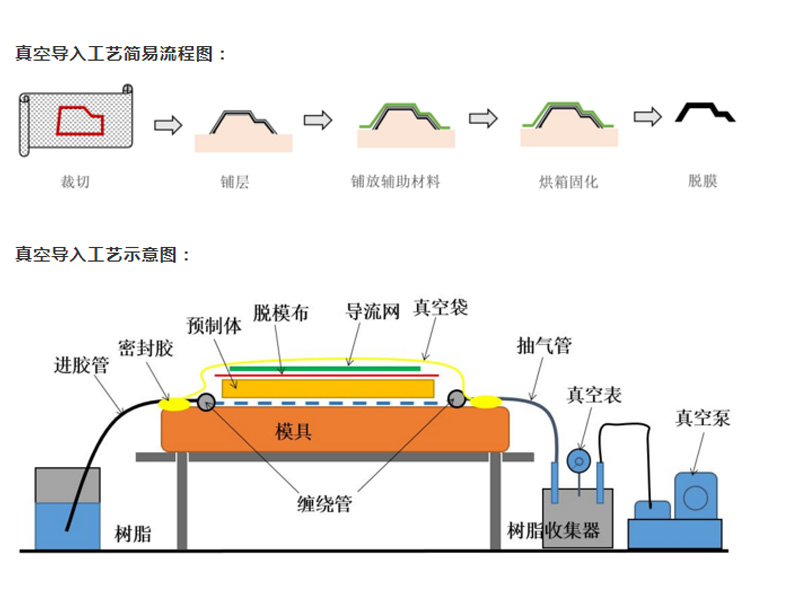
1. What is the vacuum infusion process?
The vacuum infusion process, simply put, is a composite molding method that uses vacuum negative pressure to "draw" resin into fiber reinforcement materials.
The specific process is as follows:
- Lay up reinforcement materials: On a single-sided rigid mold, lay "dry" fiber fabrics (fiberglass, carbon fiber, etc.) according to design requirements, without any resin mixed in;
- Lay auxiliary materials: Sequentially lay peel ply, flow mesh, and other auxiliary materials, then seal the entire system with a vacuum bag film;
- Apply vacuum: Use a vacuum pump to evacuate all air from the vacuum bag, creating negative pressure in the mold cavity;
- Infuse resin: Utilize the pressure generated by vacuum to "draw" liquid resin (with curing agent already mixed) into the fiber layers through pre-laid piping;
- Cure and demold: After the resin has fully impregnated the fibers, cut off the resin supply, complete curing under vacuum, and demold to obtain the finished product.
Since the entire infusion process is carried out in a vacuum-sealed environment, the finished product contains very few bubbles, and the fiber content can reach 70% or even higher. As a result, the components are lighter in weight and higher in strength.
2. The core role of vacuum systems in the process
The vacuum infusion process places extremely stringent demands on the vacuum system – requiring not only a sufficiently high ultimate vacuum but also a sufficiently large pumping speed and long-term stable pressure-holding capability. A single standard single-stage rotary vane pump often struggles to meet all these requirements simultaneously, which is precisely why vacuum systems are designed to solve this problem.
Vacuum systems perform several key tasks in the vacuum infusion process:
2.1 Rapidly establish and maintain the vacuum level required for the process
The vacuum infusion process requires the system to achieve a very high vacuum level – typically requiring a vacuum of -0.095 MPa or higher (i.e., absolute pressure below approximately 5 kPa), and in some cases even higher. At the same time, the entire infusion process may last several hours, during which the vacuum level must remain consistently stable.
Through the combination of a main pump (such as a Roots pump) providing high pumping speed and a backing pump (such as a rotary vane pump) providing high vacuum, a vacuum system can quickly evacuate air from large molds and maintain a stable vacuum throughout the entire infusion cycle. This is particularly critical for the molding of large components such as wind turbine blades measuring tens of meters in length.
2.2 Ensure product quality by eliminating bubbles and voids
The vacuum level directly affects the final quality of the product. Studies have shown that the vacuum level has a significant impact on the void content of composite materials – when the vacuum is in the range of 80–90 kPa, the void content is at its lowest. If the vacuum is insufficient, residual air in the fiber layers will form bubbles and voids during resin infusion, severely affecting the mechanical properties and surface quality of the component.
The stable high vacuum provided by a vacuum system thoroughly removes gases from the fiber layers and the mold cavity, ensuring that the resin fully impregnates the fibers in a bubble-free environment, resulting in dense, high-strength composite components.
2.3 Provide the driving force for resin flow
In the vacuum infusion process, the ability of resin to flow and impregnate fibers depends entirely on the pressure difference created by vacuum as the driving force. The vacuum system creates negative pressure inside the mold, and atmospheric pressure "pushes" the resin from the resin container into the mold, where it distributes evenly along flow channels and flow mesh, penetrating each fiber layer.
If the vacuum system has insufficient capacity and the negative pressure is inadequate, the resin flow rate will slow down, and it may not even completely fill the entire mold. Conversely, if the vacuum is too high or fluctuates excessively, it may alter the resin flow path, causing local dry spots or resin pooling. Therefore, a vacuum system with stable performance and precise control is a prerequisite for successful resin infusion.
2.4 Pressure holding and airtightness verification
Before resin infusion begins, the vacuum system must first undergo a pressure-holding test – evacuate to vacuum, close the valve, and observe the vacuum level drop over a certain period to verify the system's airtightness. Typically, the requirement is that the vacuum drop should be less than 10 mbar within 15 minutes.
The pressure-holding capability of the vacuum system directly determines the reliability of the airtightness test. If the system itself has leaks or poor sealing, it will not only fail the pressure-holding test but may also cause the entire product to be scrapped due to pressure fluctuations during the subsequent hours of infusion.
3. Common types of vacuum systems for the vacuum infusion process
Depending on the scale and requirements of the vacuum infusion process, different types of vacuum systems are typically selected:
3.1 Roots rotary vane vacuum system
This is one of the most common configurations in the vacuum infusion process. A Roots pump serves as the main pump to provide high pumping speed, while a rotary vane pump serves as the backing pump to provide high vacuum. This combination compensates for the pumping speed reduction of two-stage rotary vane pumps in the medium vacuum range (10³–1 Pa) and offers significant energy savings compared to two-stage rotary vane pumps with the same pumping speed.
3.2 Roots screw vacuum system
This configuration uses a Roots pump as the main pump and an oil-lubricated screw pump as the backing pump. Screw pumps have greater tolerance to dust and moisture, making them suitable for handling the small amounts of resin vapor that may be released during the vacuum infusion process, and they also have longer maintenance intervals.
3.3 Multi-stage Roots vacuum system
For extremely large components (such as wind turbine blades tens of meters long), two or even three stages of Roots pumps may be connected in series to achieve higher pumping speed and deeper ultimate vacuum.
4. Key considerations for vacuum system selection
When selecting a vacuum system for the vacuum infusion process, the following factors should be comprehensively considered:
- Mold volume and component size: Large components require higher pumping speed to achieve vacuum within a reasonable time;
- Vacuum level required by the process: Generally requires an absolute pressure below 5 kPa, or even lower;
- Resin system and volatiles: Some resins release small amounts of volatiles during infusion, requiring consideration of the system's corrosion resistance and oil separation capability;
- Pressure-holding time and stability: The infusion process may last several hours, requiring the system to operate stably for extended periods;
- Site environment: Whether there is dust in the workshop, whether explosion-proof requirements exist, etc.
Conclusion
In the vacuum infusion process, a vacuum system is far more than just an "air extraction device" – it is the power source, quality assurance, and efficiency foundation of the entire process. From rapidly establishing vacuum and thoroughly eliminating bubbles, to stably driving resin flow and monitoring pressure throughout, every aspect of the vacuum system's performance directly relates to the success or failure of the finished product.
Choosing the right vacuum system is the first step to success in the vacuum infusion process; choosing wrongly can render all mold preparation and material layup efforts in vain. For companies planning or upgrading vacuum infusion production lines, understanding the role and value of the vacuum system in the process is the foundation for making sound investment decisions.