
Puyan Machinery customizes a duty/standby rotary vane vacuum system for a hospital in Jinan — the application of vacuum systems in hospital negative pressure systems. Recently, a duty/standby rotary vane vacuum system customized by Puyan Machinery for a hospital in Jinan was delivered and put into operation. The system adopts a skid-mounted integrated structure, integrating oil-lubricated rotary vane vacuum pumps, bacterial filters, a vacuum buffer tank, and a PLC intelligent control cabinet into one unit. Under normal operating conditions, a single pump in operation is sufficient to meet the negative pressure suction needs of the entire hospital. When the duty pump fails or requires maintenance, the standby pump automatically takes over, ensuring uninterrupted operation of the suction system.
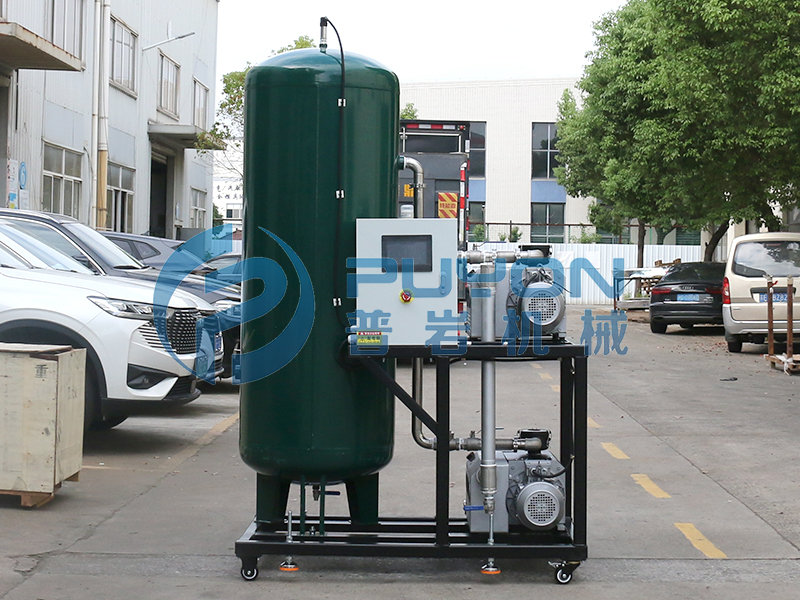
Behind this system lies a critically important piece of infrastructure in hospital construction — the medical negative pressure system. The vacuum system is the "heart" of this system. So what role exactly does a vacuum system play in a hospital negative pressure system? Why must it be "duty/standby"? And what technical advantages do rotary vane vacuum systems offer? Today, we will use this case to clarify these questions.
1. Why do hospitals need negative pressure systems?
In the daily diagnosis and treatment activities of a hospital, the negative pressure suction system is an indispensable piece of infrastructure. It is mainly used to suction away sputum, blood, pus, and other contaminants from patients, and is widely used in operating rooms, emergency rooms, intensive care units, inpatient wards, dental departments, and other clinical departments. The system uses the vacuum pump system at the central suction station as the negative pressure source, bringing the suction pipeline to the required negative pressure level and generating suction at terminal outlets in operating rooms, emergency rooms, and other locations for medical staff to use at any time.
According to the technical requirements for medical vacuum negative pressure systems, the system's negative pressure typically needs to be controlled within the range of -70 kPa +10% to -20 kPa to meet the suction needs of different clinical scenarios. The suction system must ensure that the pressure inside the pipeline remains below ambient pressure under all circumstances, with the negative pressure maintained between -0.02 MPa and -0.07 MPa, and adjustable within this range.
2. Rotary vane vacuum systems: the core technical approach for medical negative pressure systems
In the selection of vacuum pumps for medical negative pressure systems, oil-lubricated rotary vane vacuum pumps are among the most widely applied technical solutions. Rotary vane pumps offer advantages such as low noise, robust durability, economy, and ease of operation and maintenance. Their internal oil circulation provides high volumetric efficiency and stable flow output, resulting in high operational reliability.
Compared with the water ring vacuum pumps commonly used in earlier hospitals, the advantages of oil rotary vane pumps are more pronounced: water ring pumps consume large amounts of cooling water, and their vacuum level fluctuates with changes in ambient temperature and cooling water temperature, resulting in higher operating costs. Oil rotary vane pumps, by contrast, use internal oil circulation, provide stable vacuum levels, require only a gas pipeline for installation without additional cooling water piping, and are easier to maintain. For this reason, more and more hospitals in China are replacing their existing water ring pumps with oil rotary vane vacuum pumps during negative pressure system upgrades.
3. Why must it be "duty/standby"?
Medical negative pressure systems have a fundamental difference from general industrial vacuum applications: they are directly related to patient safety. If suction on the operating table is interrupted, the consequences are unimaginable. Therefore, the design of medical vacuum systems must follow the redundancy principle.
According to the "Guidelines for the Management of Logistics Safety Production in Medical and Disease Control Institutions," a medical vacuum manifold should be equipped with at least one standby vacuum pump. When a single vacuum pump fails, the remaining vacuum pumps should be able to meet the design flow rate. This means the system must not lose suction capability under any circumstances due to the failure of one pump.
"Duty/standby" is a common configuration for medical negative pressure systems: during normal operation, running a single vacuum pump is sufficient to meet the needs of the entire hospital. When the duty pump fails or requires maintenance, the standby pump automatically starts and takes over, ensuring uninterrupted operation of the suction system. In terms of actual control logic, the system is controlled by a PLC program that automatically switches between the two pumps and alternates their operation on a "first-start, first-stop" basis. When one unit cannot meet the system's needs, the second unit automatically starts. The two pumps can operate individually or simultaneously during peak negative pressure demand, with automatic switching for convenient hospital management.
The duty/standby rotary vane vacuum system customized by Puyan Machinery for a hospital in Jinan was designed precisely based on this safety logic. Through its intelligent control system, the system achieves automatic rotation and automatic fault switching, fundamentally eliminating the risk of negative pressure interruption caused by a single pump failure.
4. Key configuration points for medical vacuum systems
A qualified medical negative pressure vacuum system requires several key auxiliary components in addition to the core vacuum pumps:
Bacterial filters are a signature configuration that distinguishes medical vacuum systems from industrial systems. A medical vacuum manifold should be equipped with bacterial filters with a filtration accuracy of 0.01 μm to 0.2 μm and an efficiency of 99.995%. Each set of filters should meet the design flow rate requirements. This ensures that the discharged gas does not carry pathogenic microorganisms or contaminate the environment.
A vacuum buffer tank is used to smooth out system pressure fluctuations, reduce the start-stop frequency of the vacuum pumps, and extend equipment life. Each vacuum pump also needs to be equipped with an inlet filter, a check valve (to prevent gas backflow when the vacuum pump stops), flexible connectors, and isolation valves.
In terms of the control system, modern medical vacuum systems commonly adopt PLC + touch screen intelligent control solutions, capable of displaying system vacuum pressure, vacuum pump operating status, system alarm records, and other information, with alarm functions for high exhaust temperature and motor overload trips. The system also features three modes — manual, automatic, and stop — and can automatically switch to pressure switch control if the central controller fails, ensuring continuous air supply.
5. From technology to practice: the application value of this system
The duty/standby rotary vane vacuum system customized by Puyan Machinery for a hospital in Jinan fully considers the actual operating requirements of a hospital negative pressure system in its technical configuration. The system uses oil-lubricated rotary vane vacuum pumps as the core power units, with the pumping speed of each pump matched and designed according to the hospital's actual air demand, ensuring that one pump can meet the negative pressure needs of the entire hospital under normal operating conditions. The two pumps achieve automatic rotation and automatic fault switching through the intelligent control system, fundamentally eliminating the risk of negative pressure interruption caused by a single pump failure.
The bacterial filters and exhaust disinfection devices supplied with the system ensure that the discharged gas undergoes effective sterilization treatment, complying with hospital infection control requirements. The system design follows the principle of complete redundancy — the failure of any component does not affect the overall operation of the system. When a single vacuum pump fails, the remaining vacuum pumps can still meet the design flow rate requirements.
For hospital logistics management departments, the value of this system lies not only in safety and reliability but also in operational convenience. The PLC control system can store historical event records, and all alarm content can be remotely monitored via Ethernet, allowing duty personnel to monitor equipment status without frequently entering the pump room. The automatic rotation function balances the operating time of the two pumps, extending the overall service life of the equipment.
Conclusion
The application of vacuum systems in hospital negative pressure systems can be summarized in one sentence: safety redundancy takes precedence over all performance indicators. The duty/standby configuration, the mandatory requirement for bacterial filters, and the PLC automatic switching control logic — all design elements point to the same goal: ensuring that negative pressure suction is never interrupted under any circumstances.
The duty/standby rotary vane vacuum system customized by Puyan Machinery for a hospital in Jinan is a concrete practice of this design philosophy. From vacuum pump selection to control system integration, from bacterial filtration to exhaust disinfection, every step revolves around the safety and reliability of the hospital negative pressure system. For medical institutions planning or upgrading their medical negative pressure systems, understanding the necessity of "duty/standby" and the technical characteristics of rotary vane vacuum systems is the foundation for making correct equipment selection decisions.